Something has shifted decisively in how designers and developers across MENA approach the brief. Biophilic design, the deliberate integration of natural elements, materials, and sensory experiences into the built environment, was until recently a premium add-on, a statement of ambition rather than a baseline expectation. That is no longer true. Across the UAE, KSA, and the wider region, practitioners are reporting the same thing: when a brief arrives without biophilic requirements today, the absence is noticeable. The conversation is no longer about whether biophilic design belongs in a project, but how it should be implemented.
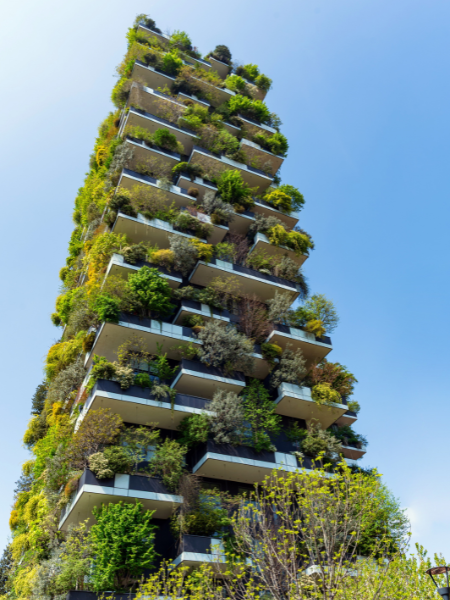
From luxury to specification standard: what’s driving the shift
Three forces have converged to move biophilic design from aspiration to expectation across the region.
Certification frameworks are the most structural driver. LEED v5, launched in April 2025, gives explicit weight to strategies that strengthen connections between people and their natural environment, including biophilic elements across both interior and exterior conditions (1). The WELL Building Standard v2 goes further, placing biophilia within its ‘Mind’ concept as both a precondition and a scored optimisation, with specific requirements for plant coverage and nature access per floor (2). With the UAE alone home to over 550 LEED-certified projects and Dubai ranked third globally for green building count, the certification pipeline is generating structural demand for biophilic specifications that did not exist five years ago (3).
The commercial case is reinforcing this. LEED-certified buildings in Dubai command rental yields 6-8% higher than uncertified equivalents, giving developers a clear ROI argument for biophilic investment that meets certification requirements (4). And client expectation has hardened: designers across the region report that clients now notice the absence of biophilic elements in a brief rather than treating their presence as a bonus. The conversation has moved from ‘can we include some greenery?’ to ‘why isn’t this already here.
Biophilia in the desert: MENA’s own interpretation
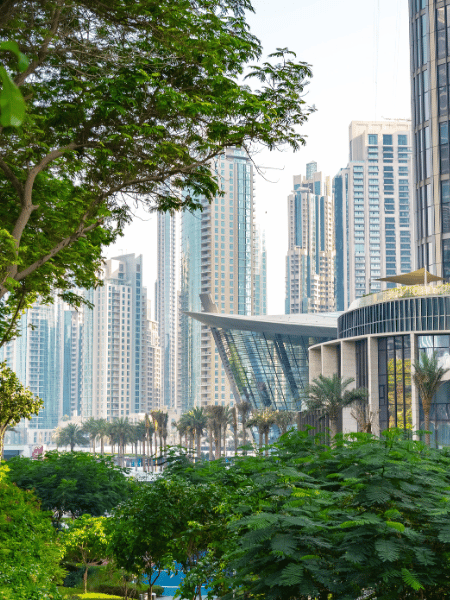
What is particularly significant about the current moment in MENA is that the region is not importing a biophilic design vocabulary wholesale from Europe or Singapore. It is developing its own. The desert climate, cultural heritage, and the specific urban conditions of cities like Dubai, Riyadh, and Doha are generating a distinctly regional interpretation of what it means to bring the outside in.
The constraints are real: intense sun requires filtered daylight rather than maximised exposure; outdoor space is seasonal; views to nature from urban towers are limited. But these constraints are producing genuinely creative responses. The mashrabiya screen, the enclosed courtyard, the disciplined use of water and shade in traditional Islamic architecture all provide precedents that contemporary MENA designers are reinterpreting rather than replacing. The principle has deep roots here. What is new is its formal integration into mainstream specification practice.
Regional suppliers are increasingly able to support this direction. Desert-adapted plant palettes are available with predictable maintenance protocols suited to the GCC climate, removing the objection that historically gave developers pause on living systems.
The materials, finishes and suppliers making it real
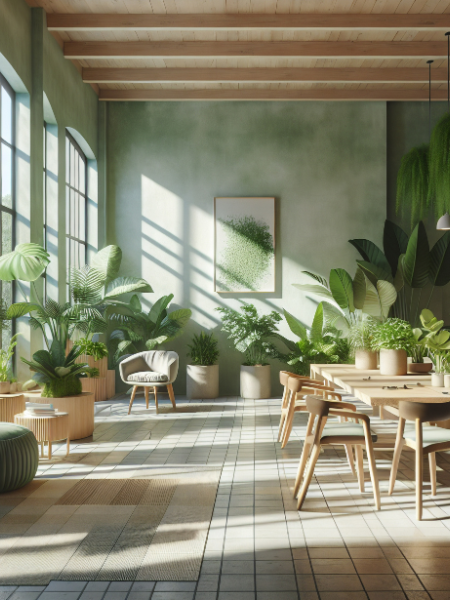
For designers and developers ready to specify, four material categories define current practice across the region.
Living systems: Moss walls, vertical gardens with automated irrigation, and biophilic pods are all now available through regional suppliers with desert-adapted palettes. The maintenance argument that once held developers back has largely been resolved at the specification stage for projects that engage the right suppliers early.
Natural stone and earthy materials: Regional stone, rammed earth panels, and raw plaster finishes deliver a dual benefit: biophilic effect combined with local sourcing, which can support green building certification goals while reducing supply chain exposure. The thermal mass and tonal warmth of regional stone are performance properties in this climate, not only aesthetic ones.
Timber and organic forms: Engineered timber specified for GCC humidity and temperature ranges, reclaimed wood and biomorphic furniture and architectural details bring organic form into the palette. Climate-appropriate treatment and verified sourcing are essential for achieving green certifications and ensuring long-term durability, making early supplier documentation a critical part of the specification process.
Lighting and sensory design: Circadian-responsive systems, daylighting strategies using screens, brise-soleil, and fritted glass, water features, and planting as acoustic softening all extend biophilia beyond the visual. The full sensory register of a space contributes to the wellbeing outcomes that certification frameworks measure and reward.
A regional design movement, not a global trend
What is underway in MENA is not the adoption of someone else’s design philosophy. It is the emergence of a regionally specific approach to healthier, more grounded built environments, one shaped by this climate, this heritage, and these cities. For designers and developers specifying now, the question is not whether to engage with biophilic design. It is how to do it in a way that is genuinely rooted in the region.
Position your brand at the forefront of wellness-centric design at INDEX. Connect with architects, designers, industry pioneers and buyers seeking sustainable materials and solutions that support healthier spaces and define the MENA interpretation of biophilic design. Secure your stand today.
Sources:
1. Glass Magazine, 2025
2. WELL Standard
3. EcoMENA
4. ae, citing 2023 study
FAQs
What is biophilic design and how is it used in GCC interiors?
Biophilic design is the intentional integration of natural elements into the built environment: living systems, natural materials, organic forms, filtered daylight, and multisensory references to nature. In GCC and wider MENA interiors, it is being adapted for the desert context through climate-responsive plant selection, shading strategies that maximise filtered natural light, regional stone and earthy material palettes, and cultural references to water, shade, and traditional Arabic courtyard architecture. It has moved from a premium feature in high-end hospitality to a baseline specification across commercial, residential, and mixed-use developments across the region.
Why are GCC developers specifying biophilic design?
Three factors are driving biophilic design into mainstream MENA development briefs: certification requirements (LEED v5 includes strategies connecting people with their natural environment; WELL Building Standard v2 includes biophilic design in its Mind concept as both a precondition and a scored optimisation), commercial performance (LEED-certified buildings in Dubai command rental yields 6-8% higher than uncertified buildings), and client expectations (designers across the region report that clients now notice the absence of biophilic elements in a brief, rather than treating their presence as a bonus).
What materials are used for biophilic design in UAE and KSA interiors?
Designers specifying biophilic design across MENA are working with four main material categories: living systems including moss walls and vertical gardens maintained through automated irrigation systems adapted for desert conditions; natural stone and earthy finishes including regional stone, rammed earth panels, and raw plaster; climate-certified timber and organic forms with verified sourcing documentation; and circadian-responsive lighting systems designed to manage intense GCC sunlight.. Locally sourced materials carry the additional advantage of supporting relevant green building certification requirements while reducing supply chain risk.
Read it. Loved it. Now what?
More ideas, naturally. Explore more insights from INDEX, or discover the latest thinking shaping hospitality and workplace design from The Hotel Show and WORKSPACE. Better yet, experience all three industries under one roof at Dubai World Trade Centre, 1–3 June 2027. One registration. Three shows. Zero difficult decisions.