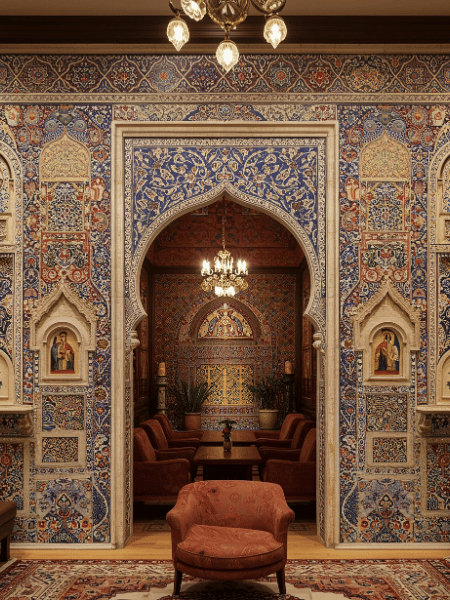
The conversation has shifted and client expectations have evolved in recent times. Designers working across MENA are reporting the same thing: clients want spaces that do something beyond look good. They want spaces that communicate, that create a specific feeling, and that stay with people after they leave. Storytelling in interior design has moved from an interesting lens to an actual professional expectation.
Beyond aesthetics: the shift to experience and meaning
The design industry has spent years developing fluency in materiality, proportion, and light. What is changing is the question those skills are in service of. Experiential design, which draws on architecture, psychology, neuroscience, and narrative, has emerged as the framework that serious studios are working within. The aspiration is no longer a beautiful room; it is a room that means something to the person inside it.
Gensler’s Design Forecast 2026 is explicit about this: experience has become the true measure of real estate value, with successful spaces delivering narrative connection, moments of delight, and genuine emotional transformation (1).
In the UAE, Gensler’s Design Forecast 2026 identifies the Emirates as a leading indicator of a shift playing out across the region, towards lifestyle ecosystems where experience-led environments are the defining design expectation rather than a premium offer (2). For designers working across MENA, this is not a trend to watch from a distance. It is already the brief.
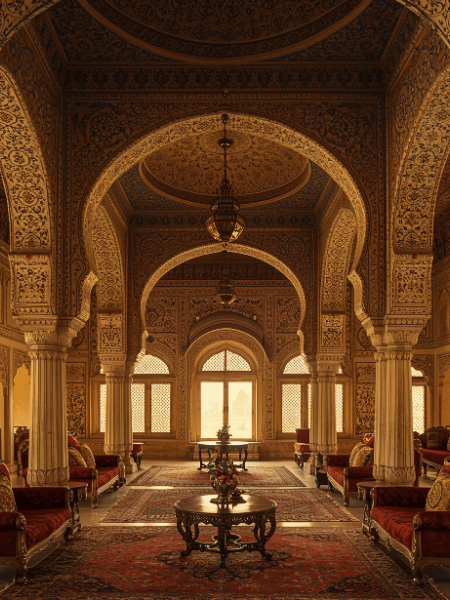
What narrative design actually means in practice
Narrative-driven interior design is not theming. Theming applies a motif. Narrative design builds an argument, one where every decision, from the sequence of spaces to the texture of a surface to where natural light falls, is guided by a coherent conceptual thread. The room communicates something because it was designed to, not because a concept was added afterwards.
The clearest expression of this shift in 2026 is the move towards hyper-localisation across design disciplines. Leading studios are replacing the globally generic aesthetic with vernacular materials, regional craft, and cultural storytelling as the core of the brief itself (3).
The logic is straightforward: spaces that are rooted in a specific place, in its history, its materials, and its people, offer something that cannot be replicated.
Across MENA, designers are increasingly being asked to integrate this thinking from the earliest stages of a project. Storytelling through art, materials, and spatial sequence requires research into the essence of a community, its history and daily life, before any design decision is made (4).
Specifying local materials and commissioning regional artisans are not aesthetic choices. They are the structural decisions of a narrative approach.

Emotion as design intent
The question clients are asking has changed. It used to be: does this look right? Now it is: how will this make people feel, and will they want to come back? Emotional connection is not a secondary consideration layered over a resolved interior. For a growing number of briefs, it is the primary intent.
The psychologist Donald Norman’s three levels of emotional design offer a useful framework for practitioners working this way (5).
- The visceral level is the immediate sensory impression: what hits you in the first five seconds.
- The behavioural level is how the space functions as you move through it, whether it supports or resists what you are trying to do.
- The reflective level is the meaning it leaves, the story you tell someone afterwards about where you were.
Wimberly Interiors identifies one of the defining shifts of 2026 as a renewed focus on how a space feels before how it photographs. Light, scent, acoustics, and touch are being treated as core design tools rather than finishing considerations (6). A space designed to photograph well and a space designed to be remembered are increasingly different briefs.
The spaces that endure
The spaces people remember are rarely the ones that looked the most finished. They are the ones that gave them something to feel, or a reason to look twice, or a story they repeated afterward. That is what narrative design is actually for. Not decoration with depth, but intention from the first decision to the last.
Design with meaning is the conversation defining the industry right now. To stay informed on the latest insights, trends and material innovations, join our mailing list.
Sources:
1. Gensler, 2026
2. Gensler via Zawya, 2026
3. Wimberly Interiors via Hospitalitynet, 2026
4. BE4 Design, 2025
5. IXDF, 2021
6. Wimberly Interiors via Hospitalitynet, 2026
FAQs:
What is narrative-driven interior design?
Narrative-driven interior design is an approach where every spatial decision, from layout and material selection to the sequence of light and the texture of surfaces, is guided by a coherent conceptual thread or story. It is distinct from theming, which applies visual motifs decoratively. Narrative design builds a spatial argument: the room communicates something because it was designed to. The result is a space that occupants experience differently, remember longer, and are more likely to return to.
How does storytelling improve interior design?
Storytelling gives interior design a framework for decision-making that goes beyond aesthetic preference. When designers work from a clear narrative, choices about materials, light, sequence, and texture become purposeful rather than arbitrary. Research cited in Gensler’s 2026 Design Forecast identifies emotional transformation and narrative connection as the defining characteristics of the highest-performing spaces. In practice, spaces designed with a coherent story tend to generate stronger emotional resonance, higher return rates, and more distinctive brand identity for the organisations that commission them.
Read it. Loved it. Now what?
More ideas, naturally. Explore more insights from INDEX, or discover the latest thinking shaping hospitality and workplace design from The Hotel Show and WORKSPACE. Better yet, experience all three industries under one roof at Dubai World Trade Centre, 1–3 June 2027. One registration. Three shows. Zero difficult decisions.